A closet built between two homes
From a single suitcase of lawn suits to a boutique loved across 64 districts — this is how Dhaka fell for Pakistani craft, one stitch at a time.
It started with one suitcase
Spriha grew up in Dhaka wearing Pakistani lawn stitched by her mother's tailor — fabric her father would carry back from business trips to Karachi. Years later, standing in a Lahore bazaar on her own first buying trip in 2021, she understood why those suits had felt different. The embroidery was not decoration. It was inheritance.
She came home with a single suitcase: twelve lawn suits, chosen one by one, paid for with her savings. She photographed them in her Banani bedroom, posted them online, and sold out in four days. The women who bought them did not ask for discounts. They asked when the next suitcase was coming.
That suitcase became a trunk, then a shipment, then a boutique. Today Spriha Closet imports curated Pakistani collections every season — but every piece is still chosen the way those first twelve were: by hand, in person, one by one.
2021
· Dhaka ·
Two cities, every season
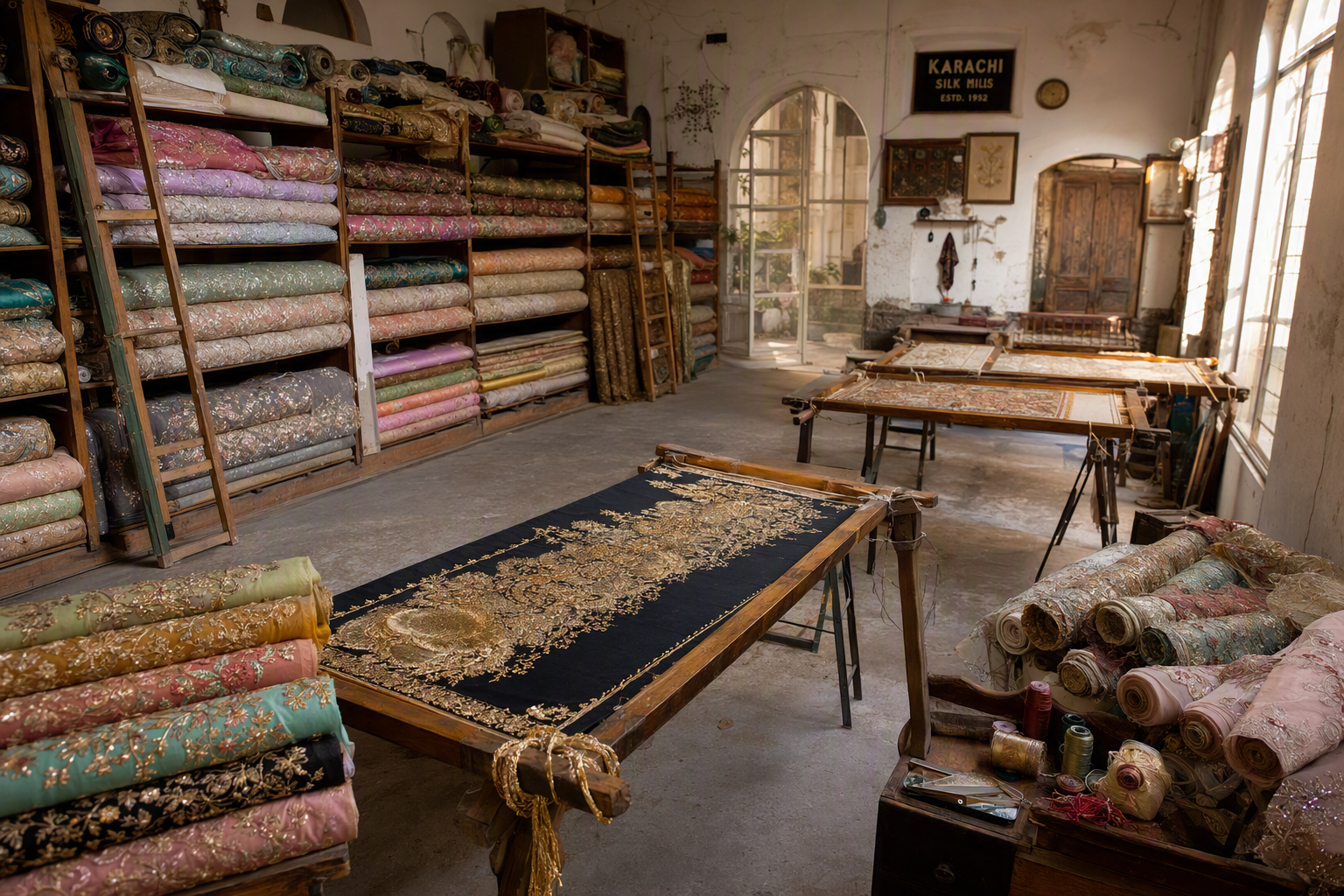
Four times a year, our founder flies to Pakistan. In Lahore she sits cross-legged in the workshops of artisan families she has known for years, choosing thread colours over cups of doodh patti. In Karachi she walks the fabric markets at dawn, feeling a hundred bolts of lawn to find the ten worth carrying home.
These are not supplier relationships managed over email. They are partnerships built over shared meals — with families who have practised zardozi, chikankari and block printing for three, four, five generations. When a design sells out in Dhaka, it is these hands we call first.
Every fabric begins in the mills of Faisalabad, woven to our specifications and dyed to a palette developed exclusively for Spriha Closet. Nothing enters the collection that our founder would not wear herself.
Embroidered
· Pakistan ·
Techniques worth travelling for
Each collection is built on heritage crafts that machines can imitate but never equal.
Zardozi
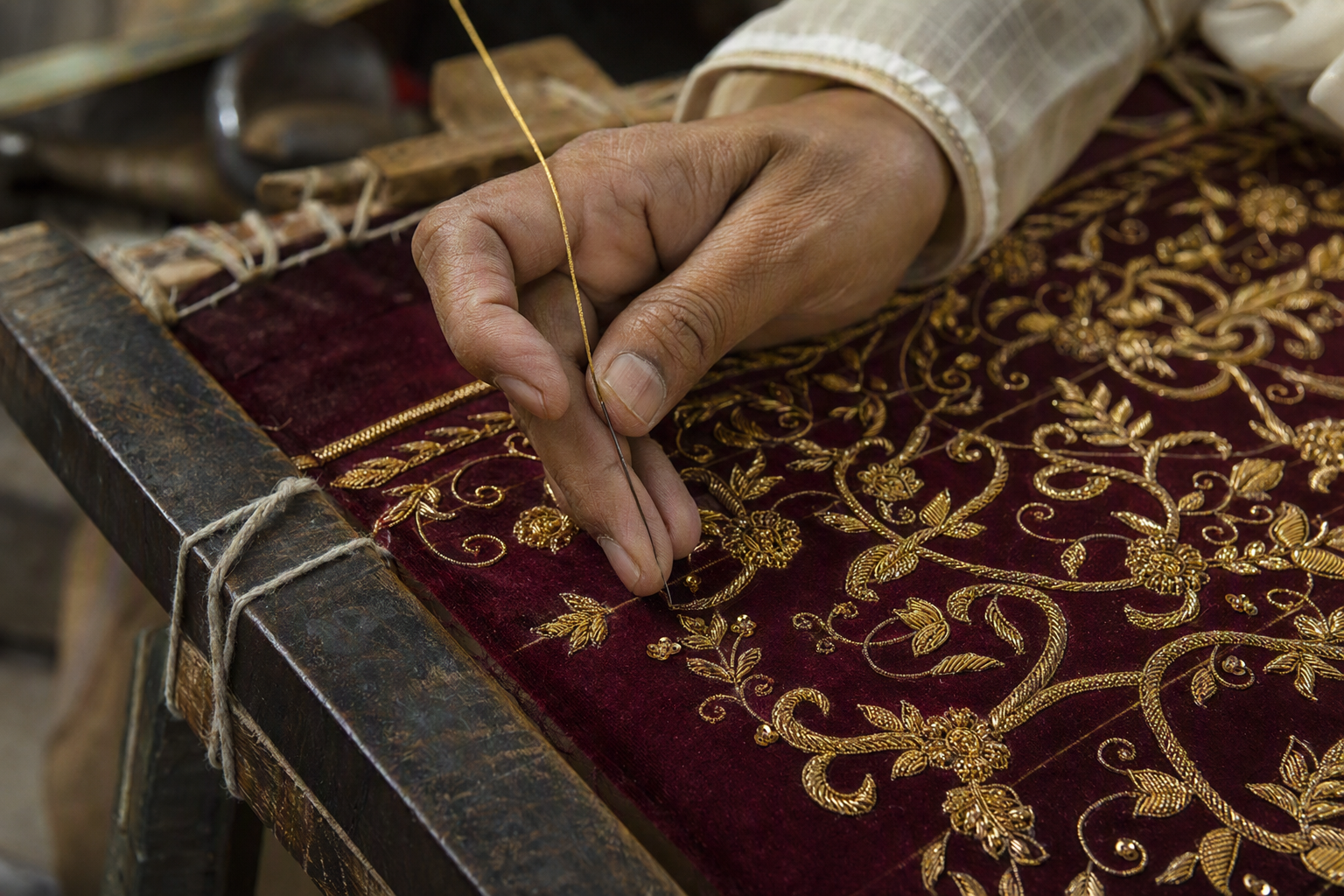
Gold Thread EmbroideryMetallic gold and silver threads couched onto silk and chiffon, a court craft of Mughal ateliers. Our zardozi is worked on wooden adda frames by master embroiderers in Lahore's old city — a single formal bodice can take eleven days.
Chikankari
Shadow-Work EmbroideryWhite-on-white stitches worked from the reverse of the fabric, so the pattern blooms like a watermark. Feather-light and impossibly fine, chikankari is the soul of our summer lawn collections — cool enough for a Dhaka April.
Block Printing
Hand-Carved Wooden BlocksTeak blocks carved with Mughal jaal motifs, dipped in natural dye and pressed by hand, one strike at a time. The tiny irregularities in every metre are not flaws — they are the signature of the artisan who printed it.
Fashion is memory you can wear.
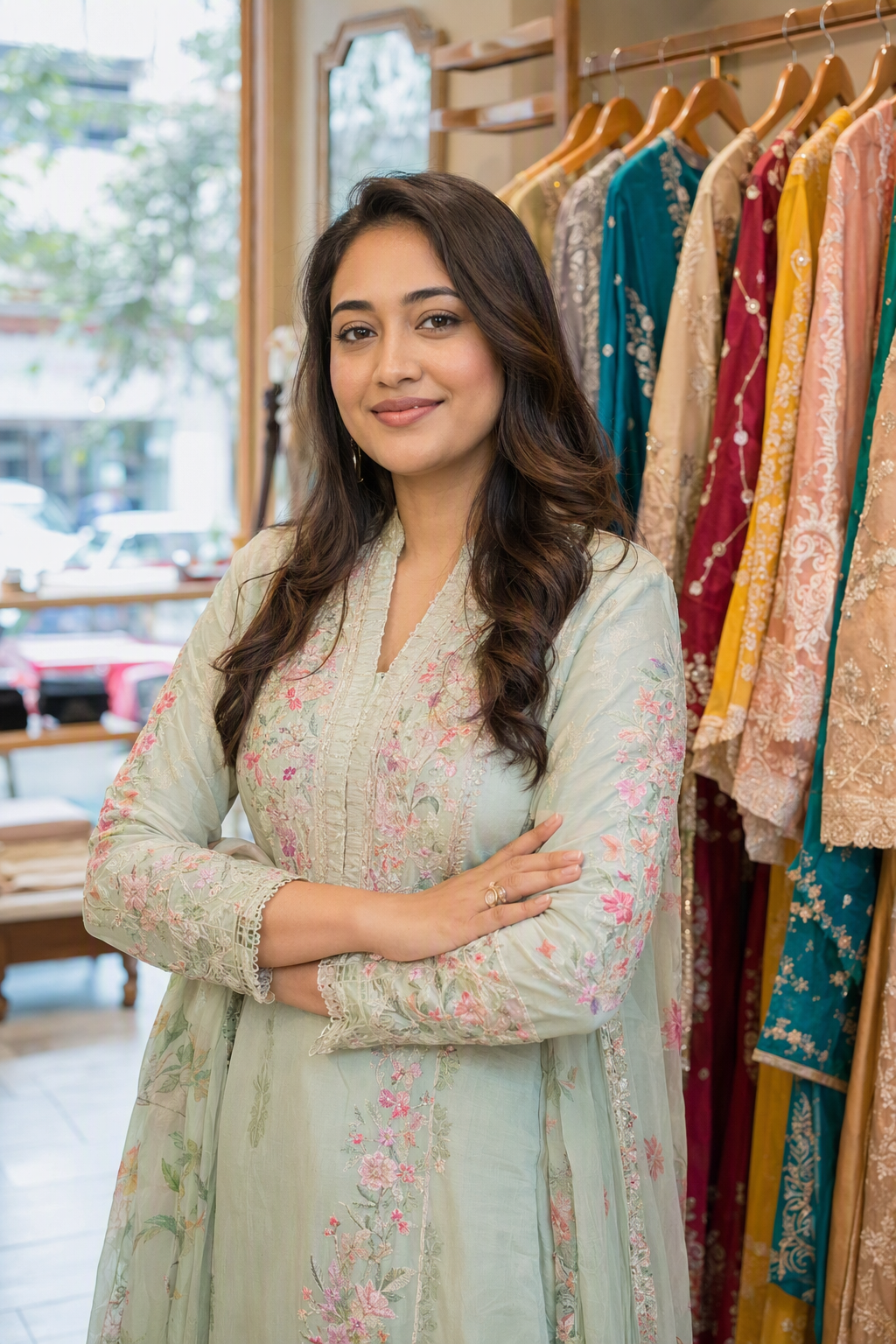
"Every woman remembers a suit — the one she wore to her sister's wedding, the one her mother saved for. I built Spriha Closet so that women in Bangladesh could own pieces worthy of becoming those memories: made slowly, by hands that care, from the finest craft traditions of Pakistan."
Checked twice, worn for years
Every design is selected face-to-face in Lahore and Karachi. We never buy from catalogues, agents or middlemen we have not met.
Pieces are checked once at the atelier before packing, and again in our Banani studio before dispatch. Loose threads and uneven dye never ship.
Mill-woven Faisalabad fabric, colour-fast dyes and hand-finished seams. Our suits are built to be worn, washed and loved for years.
See what the latest suitcase brought home
Fresh lawn, formals and kurtis from this season's Lahore and Karachi sourcing trip — with Cash on Delivery to all 64 districts.
See this season's collection →